
Service Scope
01Three key differences between a summit and an annual meeting
\n| Dimension | Annual meeting | Summit |
|---|---|---|
| Who leads | Internal staff and leadership | External guests, experts, government and corporate representatives |
| Schedule control | Coordinated internally | Guest schedules are outside your control and often shift at short notice |
| Guest flow | Centralized seating, fixed run of show | Multiple entrances, multiple guest types, zoned reception |
Takeaway
\n Design a summit around what you cannot control: agenda buffers, backup speakers and guest flows that can be split.
02Speaker invitations: longer than you think
\nT-60: Define the speaker mix
- Decide which speaker roles you need: keynote, panel, remarks, awards
- Set the seniority and number for each role
- Prepare invitation letters and a draft agenda
T-45 to T-30: Confirm one by one
- Send formal invitations and confirm travel and time slots
- Collect speaker bios, photos and talk titles
- Confirm whether interpretation, teleprompters or special equipment are needed
T-14: Lock everything
- Confirm the final attendance list and speaking order
- Collect presentation files and PPTs
- Arrange airport pickup, accommodation and a dedicated liaison
Common issue
\n Speakers changing or rescheduling is almost guaranteed.Every segment needs a fallback: a substitute speaker, an agenda item that can be shortened, a segment that can move earlier.
03Agenda design: build in buffers
\n| Segment | Suggested length | Buffer |
|---|---|---|
| Opening and remarks | 10–15 minutes | Speakers often run over; allow 5 extra minutes |
| Keynote | 20–30 minutes per speaker | Allow 3–5 minutes for changeover between speakers |
| Panel discussion | 45–60 minutes | The moderator keeps time; share topics in advance |
| Coffee break | 15–20 minutes | Also the window for speaker changeovers and media interviews |
| Awards or signing | 20–30 minutes | Group photos make this easy to overrun |
Rule of thumb
\n Build the agenda to 85% of the actual available time. The remaining 15% absorbs overruns; without it, the day will run late.
04Check-in and guest flow: where summits jam
\n- Separate by guest typeVIPs, media, general attendees and crew use different lanes so nobody queues in one line
- Pre-print badgesPrint badges in advance and pack them by surname or organization; on site you only verify, never produce
- Number of check-in desksSize by peak arrivals, not by averaging the total
- Clear wayfindingContinuous signage from the entrance to the main hall, breakout rooms and coffee area
- VIP laneKey guests skip the main queue and have a separate reception and lounge
Easiest to miss
\n The 30 minutes before opening is the check-in peak.Traffic in that window is several times the average, so desks and lanes must be sized for the peak.
05Live streaming and multimedia
\n| Requirement | What to prepare |
|---|---|
| Live stream | Cameras, switcher, streaming encoder, backup network |
| Multi-screen display | Main screen, confidence monitors, breakout-room sync |
| Simultaneous interpretation | Interpretation booths, interpreters, receiver sets |
| Recording archive | Full recording, plus delivery format and deadline for the footage |
Reminder
\n Streaming lives or dies on the network.Provide a dedicated wired connection or leased line; never rely on the venue's public WiFi.
CaseRelated case studies
\n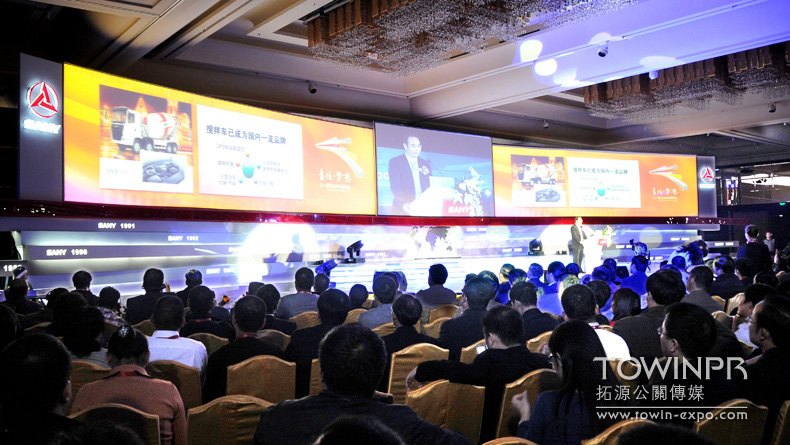 \n
Beijing · Hotel ballroom · Multi-segment agenda
 \n
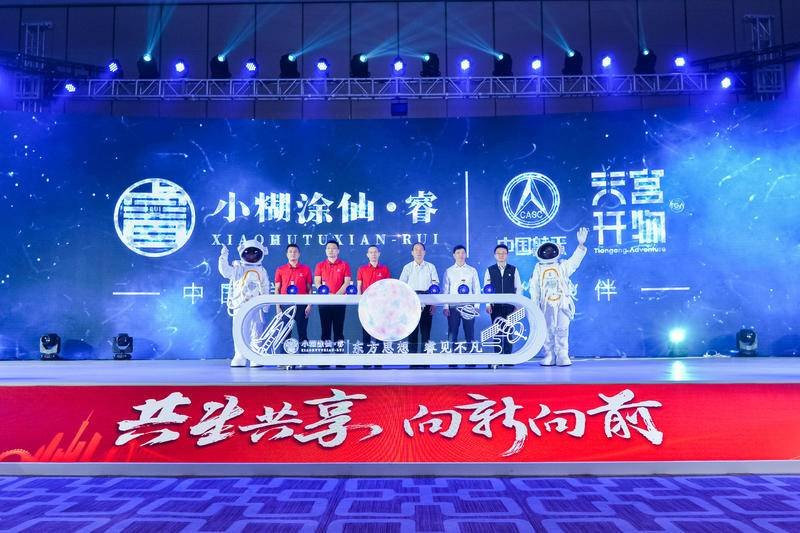
Guangzhou · Strategy launch and awards in one program