

Service Scope
01Set the standard before you discuss execution
\nThe core of any multi-city program is “head office sets the standard, local teams execute.” Without a clear standard, every city improvises.
\n| Must be standard | Can adapt locally |
|---|---|
| Key visual and color system | Specific brands of build materials |
| Spatial layout and guest flow | Fitting the venue's actual dimensions |
| Core materials and size ratios | Non-core decorative elements |
| Program pacing and key moments | Local performances or guests |
| Service standards and scripts | Catering and reception details |
Principle
\n The “must be standard” list belongs in a written document with diagrams; word-of-mouth alone guarantees drift by stop three.
02Material masters: build once, reuse across cities
\n- Demountable structureMake the main structure modular—add or remove units to fit each venue instead of rebuilding per city
- Standard packing and numberingLabel every crate with a number and a contents list so missing items are caught immediately
- Spares for fragile itemsBack up printed graphics, lightbox panels and 3D lettering in proportion to the number of stops
- Installation instructionsEach module carries a diagram so the local crew can install it unaided
Reminder
\n Shipping between cities damages materials.Timber edges, printed graphics and lightboxes are the three most fragile items—protect them and carry spares.
03Managing local suppliers
\n| Stage | How to control it |
|---|---|
| Selection | Prioritize suppliers with similar event experience who can show past on-site photos |
| Briefing | Use the same standard document, not verbal instructions by phone |
| Inspection | Check item by item against a standard list and send photos back |
| Settlement | Pay against the inspection result—no “we will settle after it is done” gray zone |
Key action
\n Before each stop opens, a photo from the standard angle must be sent back and compared with the reference image. It is the only way to catch drift in time.
04Timeline: work back from each stop
\nProgram-wide T-60
- Confirm the city sequence and dates
- Finalize the key visual and spatial plan
- Confirm the reuse plan and total production volume
Each stop T-30
- Confirm the local venue and suppliers
- Re-measure the venue and adjust the module mix
- Local permits and filings
Each stop T-7
- Materials arrive on site
- Brief the local crew
- Confirm guests and media
Each stop T-1 to T+1
- Build, inspect, run the event, tear down
- Count, pack and ship materials to the next stop
05Cross-city debrief: keep records at every stop
\n- On-site photos from a fixed angle, compared with the reference images
- Performance ratings for local suppliers
- Damage list and reorder list for materials
- Attendee feedback and on-site issues
- Improvements for the next stop
Why it matters
\n The debrief from stop one sets the quality of every stop after it.Fixing stop one's issues at stop two is the single biggest efficiency gain in a roadshow.
CaseRelated case studies
\n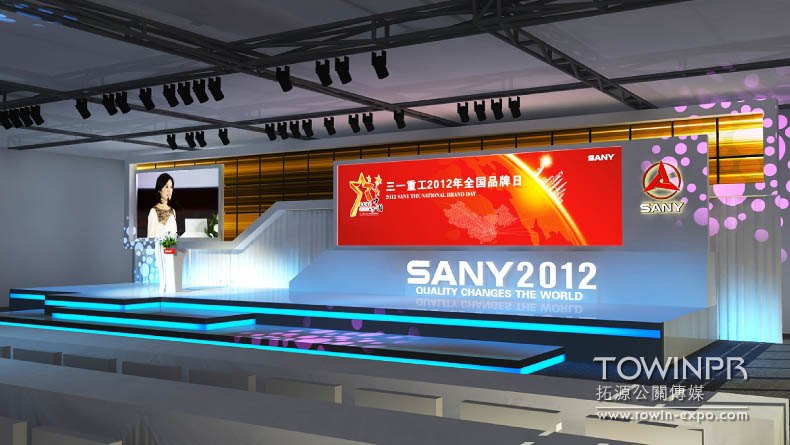 \n
Jiangsu, Shandong, Xinjiang and other regions · 28 stops · approx. 500 guests per stop
 \n
Multi-province tour · One visual system, localized content